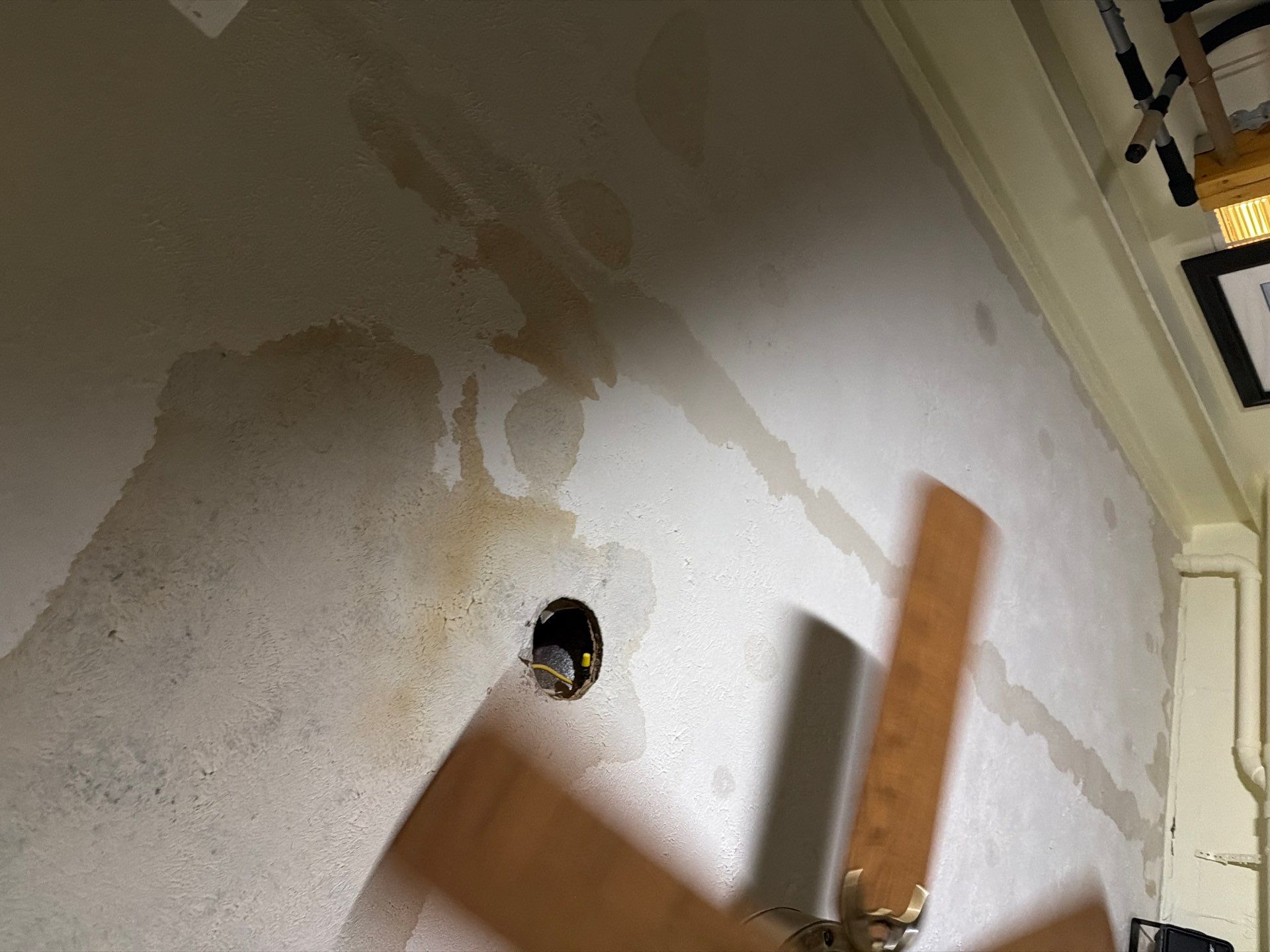
The 7 Things a Slow Leak Quietly Destroys
Slow leaks are sneaky because water travels. A pinhole behind the shower can show up as a stain three rooms away. Here is what gets damaged, ranked by how often we see it:
- Drywall and paint (almost every job)
- Insulation (loses R-value once wet)
- Subfloor and joists (rot risk after weeks)
- Cabinets and vanities (particleboard swells fast)
- Hardwood flooring (cupping, crowning, finish failure)
- HVAC ductwork (rust and microbial growth)
- Framing lumber (the expensive layer)
Each item on that list gets worse the longer the leak runs. Drywall might be replaceable for a few hundred dollars in week one. By month three, that same leak has wicked into the bottom plate of the wall, soaked the insulation, and started feeding mold colonies inside the cavity. The cost curve is not linear. It is closer to a hockey stick.
Early Warning Signs You Should Never Ignore
Most homeowners notice something. They just do not connect the dots.
- A faint musty smell that comes and goes
- Paint that looks slightly bubbled or rippled
- Baseboards pulling away from the wall
- Warm or cold spots on a floor
- Caulk lines cracking around tubs and sinks
- Unexplained increase in your water bill
- Tile grout that stays darker in one area
- A toilet that rocks when you sit on it
- Ceiling paint with a yellowish ring
- Nail pops appearing in a straight line on drywall
- Hardwood planks that suddenly feel uneven underfoot
Any single sign is worth investigating. Two together usually means active moisture. Our guide to early detection of hidden water damage goes deeper on each of these clues.
Insurance Reality for Slow Leaks
- Most policies cover sudden and accidental damage
- Most policies exclude damage from leaks that ran 14 days or longer
- Mold coverage is often capped at $5,000 to $10,000
- Documentation matters: photos, moisture logs, plumber receipts
- Filing fast helps. Our water damage claim guide walks through every step
If your adjuster denies the claim based on the "long term seepage" exclusion, ask for the specific policy language and the basis for the timeline. Sometimes a second inspection with proper moisture documentation changes the outcome.
What You Can Do Right Now
- Check under every sink with a flashlight tonight
- Feel the floor around toilets for soft spots
- Look at your water meter with everything off (it should not move)
- Smell the back of cabinets and closets on exterior walls
- Pull the fridge out once a year and inspect the supply line
- Replace washing machine and dishwasher hoses every 5 to 7 years
- Install a smart leak detector near the water heater and under sinks
- Know where your main shut off is and test it twice a year
If anything looks off, call before you start tearing into walls. We respond to Selma calls in most cases within 2 hours, and the free assessment tells you whether you have a real problem or just a cosmetic stain.
What the Restoration Process Looks Like
Once we find it, the work has a predictable rhythm:
- Stop the source (plumber or shut off)
- Document damage and moisture readings
- Remove unsalvageable materials (wet drywall, insulation, swollen cabinetry)
- Set air movers and dehumidifiers per S500 standards
- Monitor daily until materials hit dry standard
- Test for mold if growth conditions were present
- Rebuild drywall, paint, trim, and flooring
Drying typically takes 3 to 7 days. Rebuild adds 1 to 3 weeks depending on scope.
Where Slow Leaks Hide in Selma Homes
Common origin points, ranked by frequency on our call logs:
- Supply lines under kitchen and bath sinks
- Toilet wax rings and tank to bowl gaskets
- Refrigerator ice maker lines
- Dishwasher inlet hoses
- Shower pan liners and tile grout
- Water heater tank seams (often pre failure)
- HVAC condensate pans and drain lines
- Outdoor hose bibs leaking into the rim joist
- Slab penetrations where copper meets concrete
- Washing machine box valves and braided hose connections
- Roof flashing around chimneys, skylights, and vent stacks
Older Selma neighborhoods add their own wrinkles. Homes built before 1980 often have galvanized supply lines that corrode from the inside out. Homes from the 1990s frequently used polybutylene piping, which can fail at fittings without warning. Newer builds are not immune either. We see a lot of failures at push fit connectors that were installed quickly during construction and never properly seated.
Mistakes Homeowners Make Before We Arrive
We see the same handful of well intentioned errors on almost every slow leak call:
- Painting over a stain instead of investigating it
- Running a box fan on wet drywall and calling it dry
- Caulking around a leaking toilet base to "seal" the smell
- Pulling baseboards off without documenting moisture first
- Using bleach on visible mold, which can actually feed regrowth on porous materials
- Tossing damaged items before the insurance adjuster sees them
- Waiting for the smell to "go away on its own"
None of these are dumb. They are just the wrong tool for the problem. A box fan moves surface moisture but does nothing for the saturated insulation behind the wall. Bleach is fine on tile, but on drywall it leaves the mold roots intact and adds water to the cavity.
The 48 hour Mold Window
This is the part most people underestimate.
- 0 to 24 hours: water spreads, materials absorb
- 24 to 48 hours: microbial activity begins
- 48 to 72 hours: visible mold colonies possible
- 1 to 2 weeks: structural materials begin breaking down
- 1 month+: framing rot, widespread mold, air quality issues
A slow leak does not reset this clock. It keeps it running. A leak active for three months has been in mold territory for almost the entire time.
The species matter too. Wall cavities with consistent moisture tend to grow Stachybotrys (the black mold people worry about), while ceiling stains from condensate lines often produce Aspergillus and Penicillium. Neither one is something you want your family breathing. Air sampling is the only way to know what is actually in the cavity.
How Selma Water Restoration Finds a Hidden Leak
Detection is its own skill. We do not start with a sledgehammer.
- Visual inspection of suspect areas, fixtures, and ceilings
- Moisture meters (pin and pinless) to confirm wet materials
- Thermal imaging to map temperature differences behind surfaces
- Humidity readings in adjacent rooms and cavities
- Cavity inspection with borescope before opening walls
- Pressure testing when a supply line is suspected
- Tracer dye for slow toilet and shower pan leaks
Our write up on moisture mapping with thermal imaging explains exactly how we trace water from the stain back to the source.
Typical Repair Cost Ranges
Costs depend on how long the leak ran and what it touched. Below are typical Selma ranges we see for hidden slow leak jobs.
- Caught early (1 to 2 weeks): $800 to $1,800
- Moderate (1 to 2 months): $2,500 to $4,500
- Extended (3 to 6 months): $5,500 to $9,500
- With mold remediation: $8,000 to $13,000
- Subfloor and framing replacement: $10,000 to $15,000+
Two factors move the number more than anything else: how many rooms the moisture touched, and whether hardwood or cabinetry has to be replaced. A 2 foot by 2 foot ceiling repair is cheap. Pulling a kitchen island, replacing subfloor, and matching 20 year old hardwood across an open floor plan is not.